A Comparison: Fenugreek Saponins vs Saponins from other plants

The fenugreek plant grown in Saskatchewan, Canada
What makes fenugreek saponins truly stand out compared to those in other plants—like soapnuts, ginseng, yucca or quinoa—is their specific steroidal structure and their unique role as a pharmaceutical precursor.
While many plants contain triterpenoid saponins (which are mostly used for their soapy, detergent-like qualities), fenugreek is a powerhouse of steroidal saponins, which act more like "building blocks" for hormones.
1. The "Hormone Precursor" Advantage
The most significant difference is the presence of diosgenin. While other plants might have saponins that simply irritate the gut or foam in water, fenugreek saponins are chemically similar to human steroid hormones.
• Diosgenin & Yamogenin: These are the primary "sapogenins" (the core of the saponin) in fenugreek.
• Why it matters: Diosgenin is so unique that it is used commercially by the pharmaceutical industry to synthesize cortisone, estrogen, and progesterone. You won't find this specific "hormone-mimicking" utility in the saponins of yucca or
alfalfa.
2. Metabolic "Double Action"
Most plant saponins are known for lowering cholesterol by binding to it in the digestive tract. Fenugreek saponins do this too, but they add a second layer of metabolic regulation that is rare:
• Antidiabetic Potency: Fenugreek saponins (specifically the furostanol type) have a documented ability to improve insulin sensitivity and stimulate the pancreas.
• Appetite Stimulation: Interestingly, while many saponins are "anti-nutrients" that make animals eat less, certain fenugreek saponins have actually been shown to increase food intake and motivation to eat in specific clinical settings, making them "restorative" rather than just defensive.
3. Structural Comparison:
To visualize the difference, it helps to see how they are categorized chemically:
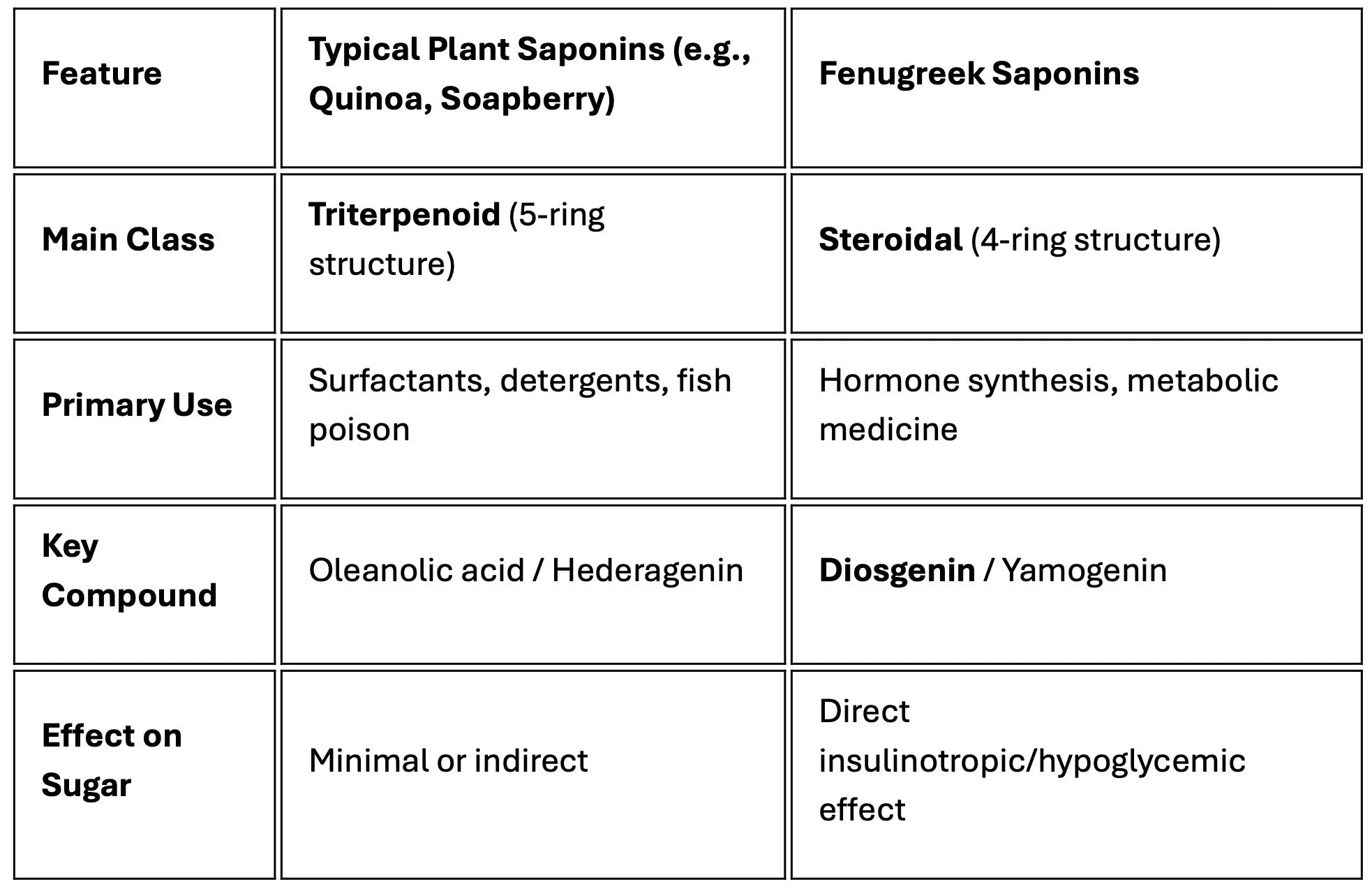
A Comparison: Fenugreek Saponins vs Saponins from other plants
4. Flavor and Palatability
If you’ve ever tasted fenugreek, you know its "maple-bitter" profile. This is largely due to its
saponins.
• Many saponins are purely bitter and "soapy" (think of the throat-burn of raw quinoa).
• Fenugreek saponins are structurally linked to sotolon, the compound that gives the plant its signature maple syrup aroma.
Summary
In short, while most saponins are just "nature’s soap," fenugreek saponins are "nature’s pharmacy." They are distinguished by their steroidal core, their ability to be turned into human hormones, and their direct impact on blood sugar and insulin levels.
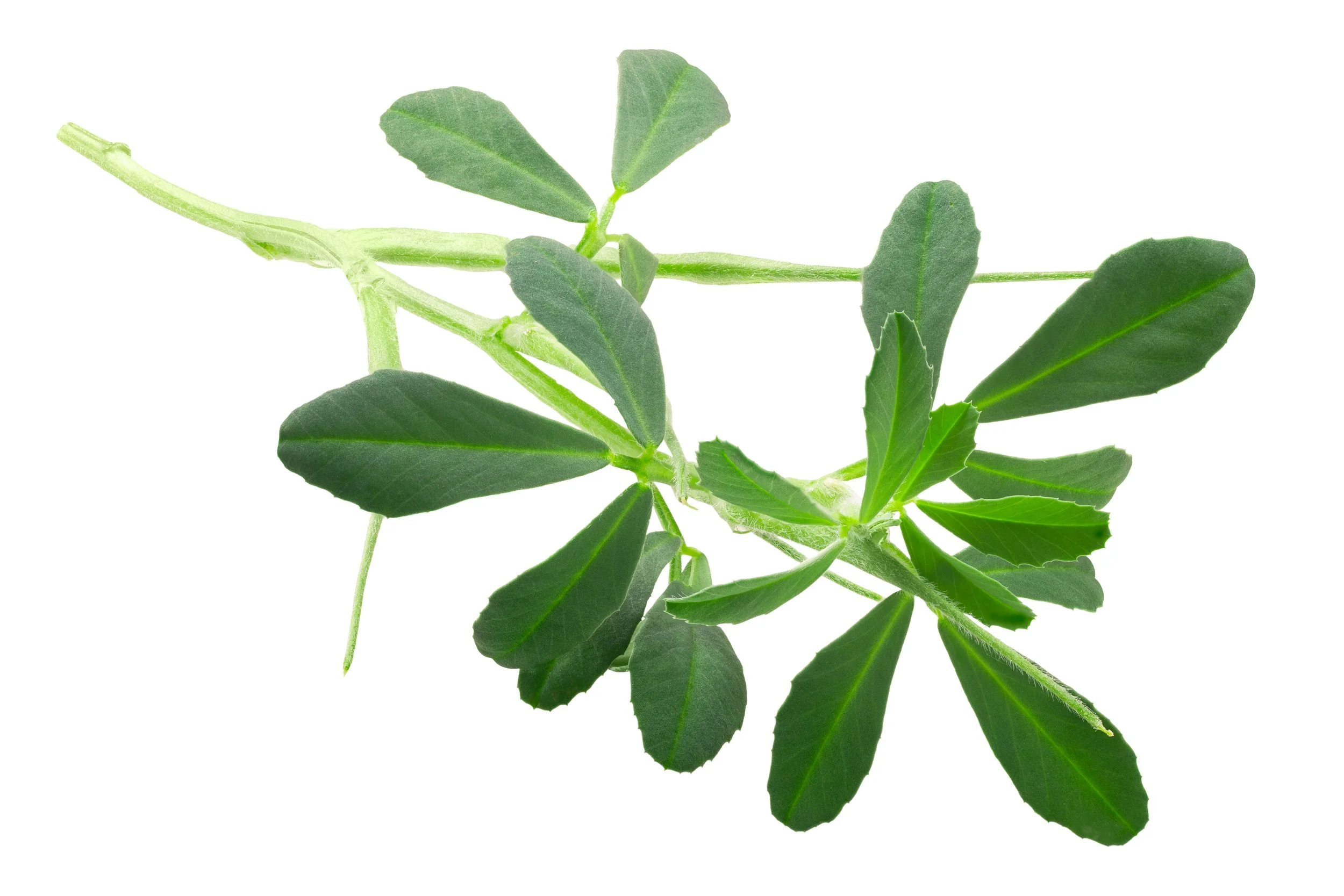
The fenugreek plant and leaves grown in Saskatchewan, Canada